

Sink or Swim

When our daughters, now 36 and 33, were five and two, I wanted them to learn how to swim. We live in Southern California, which has a lot of swimming pools, so safety was the first reason — but as a lifelong swimmer, I also wanted them to have the skills to actually enjoy the water.
When our older daughter was a baby we enrolled her in swimming lessons, but she was always freezing and miserable, despite the fact that I was in the water with her. I tried lessons again with my second daughter, but that didn’t go well either.
It was the summer of 1996 when my neighbor — whom I first met when we were both pregnant with our second girls — stopped me on the street.
“Are your kids taking swimming this summer?”
“I want them to, but I’m not sure where or how. I hated the place they’ve been going to.”
“Yeah. Mine didn’t get anything out of the woman who used to come here. Let me see if I can find somebody else to come to the house to teach them.” She had a pool, which we did not.
Two weeks later we were at her house at 8:45 in the morning, waiting anxiously for someone named “Mike” to appear. A few minutes later Mike arrived — six foot something, big smile, cap on his head, bathing suited, towel slung over his shoulder, ready to go.
“Good morning, everyone.” He said it in a friendly, businesslike way. “Is the temperature 88?” — the magic number he had given her. My neighbor looked slightly stricken.
“It feels a little cold to me. I reminded the landlady that we were beginning today.”
Mike took off a sandal and dipped his foot in.
“Oh no. We can’t begin like this. They need it to be absolutely bath-like. No lesson today, kids. Sorry. Tomorrow.” He checked the thermostat, slipped his sandals back on, and disappeared up the steps to the house like the masked man in the Lone Ranger. The children looked crestfallen.
The next day the water was even colder. My poor neighbor was beside herself. The third day the gas company was called in, and the fourth day Mike appeared, everyone raring to go.
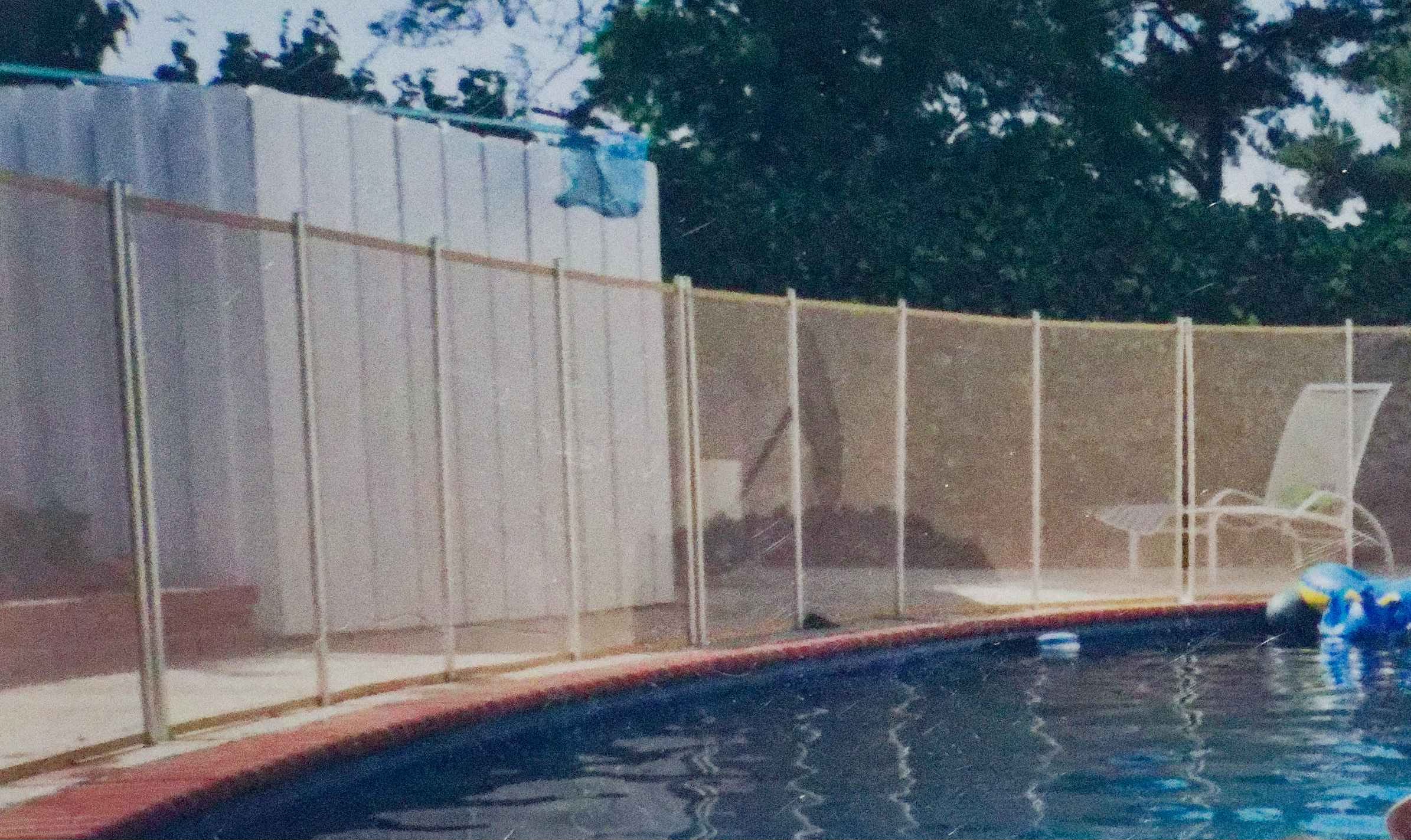
The lessons were taught in groups of four, not one on one, which I had assumed was the best way to begin. Equally unusual: ten consecutive days, not once or twice a week for months.
“I want all of you to sit on the steps of the pool. Please don’t leave the steps until I tell you to do so.” The nearly two-year-olds sat mystified, awaiting further instruction, their eyes firmly on my neighbor and me.
A year later I watched my younger daughter, now three, push off the steps and swim to Mike. The other three stood restlessly waiting their turn, impatient to add the next piece. That first summer the four little girls had huddled close to each other, shrinking into one mass, each one hoping Mike would forget to call on her.
In the second summer the camaraderie among the children on the steps was plain to see. After three days with Mike my little one pursed her lips proudly and showed me:
“Mike told me.”
On their first real day of lessons that first summer, when the pool was the right temperature and everyone was seated miserably on the steps, Mike began:
“Okay, we’ll start with the youngest. Moms, please sit on the bench and try not to encourage or interfere with the lesson. When I say they may get up, then you can help them dry off and change. Now…” He reached for my younger daughter.
“I’m going to take you out into the water and help you do some swimming.”
With that he gently lifted her off the step, like a gentleman leading a debutante out onto the dance floor. She looked over her shoulder at me, her lower lip beginning to quiver. They got to the center of the pool — a relatively small pool, maybe 15 feet by 30 feet.
“Mike’s right here and I’m going to let go of you, but I’ll be right here.” With that he let go of that round little body. She bobbed up and down, trying to catch her breath, arms flailing as she tried to stay afloat. Mike put a finger on her back to let her know he was there.
My neighbor, sitting next to me, grabbed my arm.
“Aren’t you going to do something?” She jumped up. “I’ll do something. He can’t do that!” She stared at me in disbelief. “What’s the matter with you?” she asked, gripping my arm with a vice-like grip.
“I think he knows what he’s doing,” I whispered, watching my little one labor to keep her head out of the water, naturally treading — with difficulty, but treading.
“There you go. Very good job.” He gently lifted her to his chest and patted her back. “You just rest on Mike’s shoulder. Okay.”
She was crying quietly.
“Just rest on Mike’s shoulder,” he said reassuringly, patting her back. Burping and weeping, she leaned her little blond head against his massive shoulder. “Okay, I want you to hold your lips tight like this,” he demonstrated the zipped look, “and swim over to the steps now.” He carefully unfurled her from around his neck. The crying picked up as he aimed her in the right direction and let go. One finger remained on her back, guiding her. As soon as she reached the stairs she began to climb out, crying for me.
“I want you to wait till the lesson is over before you go back to Mommy. It’s your turn now,” he said, reaching for my neighbor’s younger daughter. With that, the little girl began to try to climb out too.
“Mommy, I don’t w—”
My neighbor clutched my arm. “How can I do this? I can’t do this.”
“Here we go. You just come with Mike so we can swim.”
The little two-year-old screamed as she was led to the center of the pool. My neighbor had my arm again.
“How could you stand it?!” she asked through gritted teeth.
“I see what he’s doing.”
“You do?!” We watched as Mike repeated the exercise.
“Try not to make eye contact with her,” I suggested.
“I’m not going to do that!” Her older daughter yelled from the steps. My neighbor did her best to ignore her. The five-year-olds were certainly intrigued watching their baby sisters struggle with Mike — though the likely future was not lost on either of them.
My older daughter had just started wearing glasses and was without them, of course. She stared hard in my direction, trying to catch my eye. My little one sat on the steps whimpering.
“Very good! Can you say ‘I did a good job’?” He patted the two-year-old on her back as he brought her back to the steps.
“I did a good job,” he repeated to her as she climbed out of his arms, attempting to make a break for it.
“No!” she said defiantly, climbing out of the pool toward her mother.
“Class is not over.” Mike gently picked her up again and held her against him.
“I want my Mommy,” she wailed.
“What should I do?” my neighbor implored.
“You’re doing just fine,” he assured her in a measured voice.
My neighbor’s little one sat down next to mine, the two of them looking miserable.
That was the first summer. Now nearly three, I watched my younger daughter jump into the pool, swim the width of it, and climb out as fast as her little legs would carry her — just so she could do it again.
“Was that easy?” Mike asked, after she made big circles in the water for her breaststroke and kicked her legs for all they were worth.
She nodded.
“You certainly make it look easy!” he added, patting her on the back.
But that first summer…
“You ready?” Mike asked the older sister.
“I’m not doing this, Mommy,” she said, attempting to climb out.
“Come on,” Mike said firmly, climbing up the steps to get her.
“I don’t want to!” The others forgot their own troubles momentarily watching the standoff. You could feel the thrill of seeing one of their own stand up to this fellow.
“Let’s go,” Mike said in his mellow, firm way.
“No, no, no, no, no!” But minutes later she was swimming, face in the water, lips tightly shut. The other three couldn’t help but be impressed.
And so it went. That was day one. My older daughter had been taught at the swim school where we’d wasted two and a half summers, not to put her face in the water, and she refused to change that policy for Mike. Caught between being obedient and simply being terrified of water on her face, she was seriously stuck. When Mike tried to help her overcome it, she accused him of “trying to kill me in front of all these people, slay me at the pool” and other humdingers.
On day three, a Saturday, our husbands were on hand to observe. The Sturm und Drang had died down, but some resistance remained.
“Where did you find this guy?” my husband asked, looking panicked, out of my neighbor’s earshot.
I pointed to my neighbor. “She knew someone who knew someone who had had him teach her children.”
“Where did you meet her?” he whispered.
“Walking down the street a few years ago.” He rolled his eyes.
“Did either of you do any research on him before you hired him?” he asked, no longer bothering to whisper.
“We didn’t,” my neighbor said sheepishly. “Kinda crazy, huh?”
Each day Mike built on the previous one. By day ten all four children could jump into the pool, swim the width or length to the opposite side, grip the sides and walk their hands back (crab walk) to the steps, and get out. Just as easy for them was jumping in and hoisting themselves back out — particularly impressive for the two little ones. By the end of the session each of the four could swim a few breaststrokes, lift her head out of the water to breathe, and keep going. Most important: by the end of Mike’s first course all the children felt confident in the water. Not a cocky, foolish confidence — a confidence based on ability and reality. They were on their way to becoming swimmers, and they were thrilled.
The second summer Mike picked up exactly where he’d left them. The children could hardly wait for lessons to begin. The older girls started with the frog kick for their breaststroke, then moved on to the crawl, the backstroke, floating, and finally diving.
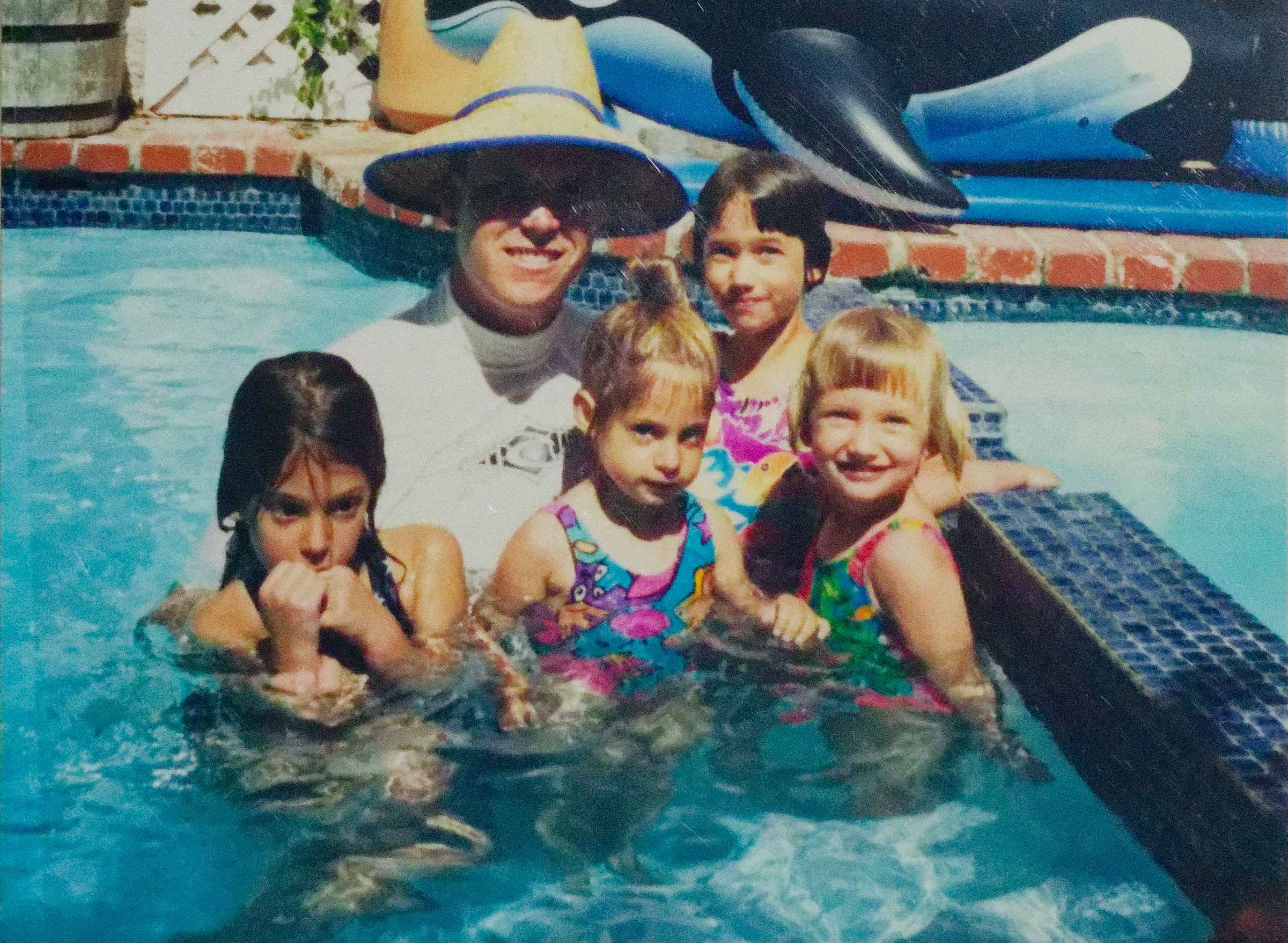
What a thrill to see my older daughter — the one who wouldn’t put her face in the water at the start of that first season — revel in her first dive: eyes focused on her navel, arms together, aiming headfirst into the water.
That first summer we’d begun lessons a few weeks before my neighbor’s family headed off to visit her parents in Southampton, and we headed off to visit my mother in Provincetown, Massachusetts. Both sets of kids swam freely every day — my neighbors in a pool, ours in the bay behind the house, as easily and happily as if they’d always done it.
One night my family was invited for dinner next door. For some reason we all got dressed up, which was totally unnecessary but fun. We walked around to the front of the house, coming through the street entrance rather than climbing over the fence to the deck overlooking the bay. As we sat enjoying the sunset, the drinks, the company, my older daughter stripped off her pretty dress, descended the steps to the water, and jumped in to swim some more.
Not surprisingly, we signed the kids up for their second season at the first opportunity. I remember it was winter, and it felt nuts arranging ten consecutive days six months in advance. But at least we got in — which isn’t the case for everyone I’ve recommended Mike to. His schedule books almost immediately.
On the last day of lessons my neighbor seemed to be studying Mike.
“Have you ever been in the Olympics?”
“’84.”
“Win anything?”
“Gold medal.”
“Whatever made you ask him?” I said, stunned.
“I just noticed he kept wearing different hats from different cities. One said Barcelona, one said LA. I just wondered.”
So that’s Mike O’Brien. We should have done research. We should have made calls. But we were lucky, and we too struck gold.
Some parents will be horrified to read this — both the description of the technique and the carelessness with which we found a swimming teacher. But it was obvious very quickly that Mike was a gentle, loving, intelligent, thoughtful teacher. A far cry from the day at my older daughter’s swim school the previous summer, when the school still used water wings and, when my daughter’s lesson was over, she slipped them off and went back into the water. Her teacher turned around to chat with someone. Holding my nearly one-year-old baby, I reached across the water to grab my drowning four-year-old out of a crowded pool. She had no idea she didn’t know how to swim and was helpless without the water wings.
With Mike there was never a sense of danger. There are obviously different methods for teaching hard things. Mike’s philosophy is that learning to swim is scary, and you can draw the process out or compact it into a few days and then swim on with the confidence of actually knowing how. Like the Suzuki method of violin playing, it throws the child into the deep end — but the results are immediate, which means you can move on to refining technique rather than building courage from scratch. I don’t know what you do if you can’t get Mike himself. Perhaps others teach the same way.
I’d never been particularly keen on cloning. Mike O’Brien made a pretty good case for it.
💙
I love this! You’re a wonderful story teller!